Faculty Online Teaching Seminar
Designing a scalable faculty development program to improve online course quality during COVID-19
Overview
During the COVID-19 pandemic, Seattle Pacific University rapidly transitioned to fully online instruction. Many faculty members were experienced classroom educators but had limited experience designing engaging online learning experiences.
I led the design and delivery of a week-long faculty development workshop that helped instructors redesign existing courses for online delivery while establishing a shared vision for what makes an online course uniquely SPU.
The program combined Canvas-based learning modules, live virtual sessions, peer collaboration, and structured design activities. Over 50 faculty participated, with approximately 20 completing the full workshop and redesigning course modules for future terms.
The Challenge
As the university moved fully online, several issues emerged across courses:
- Faculty were trained primarily in in-person pedagogy
- Many online courses relied heavily on long lecture recordings
- LMS course structures were inconsistent across departments
- Students reported low engagement and limited interaction
- Faculty were unsure how to foster participation in camera-optional environments
At the same time, SPU leadership wanted faculty to reflect on a broader strategic question:
What makes an online course distinctly SPU?
The workshop needed to address immediate pedagogical challenges while helping faculty translate the university’s educational values into the online environment.
My Role
Lead Instructional Designer and Project Manager
Responsibilities included:
- Leading project design and development
- Facilitating stakeholder collaboration with academic leadership
- Managing two additional developers and a graphics designer
- Designing the majority of workshop modules and activities
- Facilitating live virtual workshop sessions
- Deploying the program in Canvas
The workshop was developed within the university’s Educational Technology & Media (ETM) division.
Analysis
To understand faculty needs, our team gathered data from multiple sources:
- faculty surveys
- online course reviews
- student feedback during the pandemic
Several recurring challenges emerged:
- lecture-heavy online courses with minimal interaction
- limited understanding of online engagement strategies
- inconsistent LMS structure across departments
- uncertainty about how to build community in virtual environments
A key insight emerged:
Faculty needed a structured way to translate their in-person teaching philosophy into effective online pedagogy.
Solution Design
The program was designed as a week-long blended faculty workshop combining asynchronous learning with live virtual facilitation.
The design incorporated several established instructional frameworks:
- Backward Design
- Quality Matters principles
- Universal Design for Learning
- Community of Inquiry model
Rather than focusing only on theory, the workshop emphasized practical application to real courses.
Participants used one of their existing courses as a working project and completed structured activities that guided them through redesigning a course module.
Core activities included:
- rewriting learning objectives
- designing discussion prompts for meaningful interaction
- aligning assessments with learning outcomes
- creating community-building strategies for online classes
- developing engagement strategies for camera-optional learning environments
By the end of the workshop, participants had created a fully redesigned online course module they could immediately implement.
Development
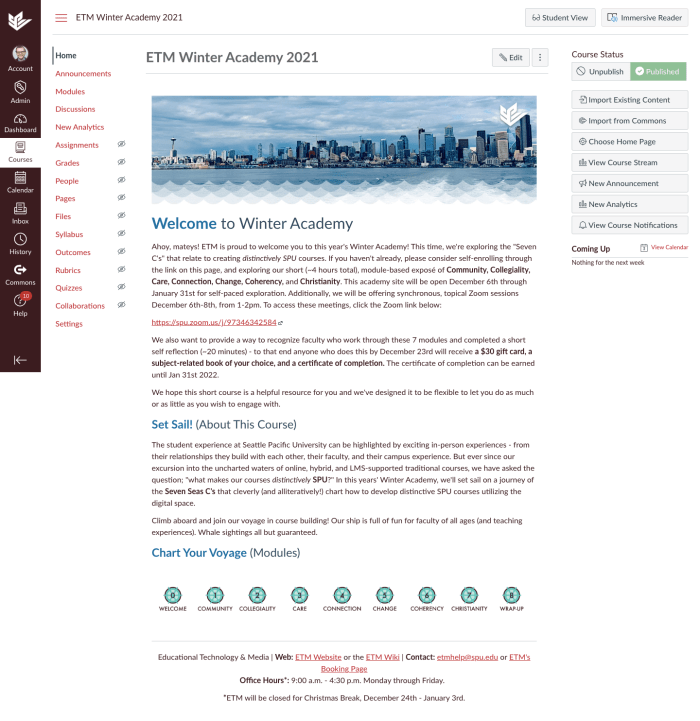
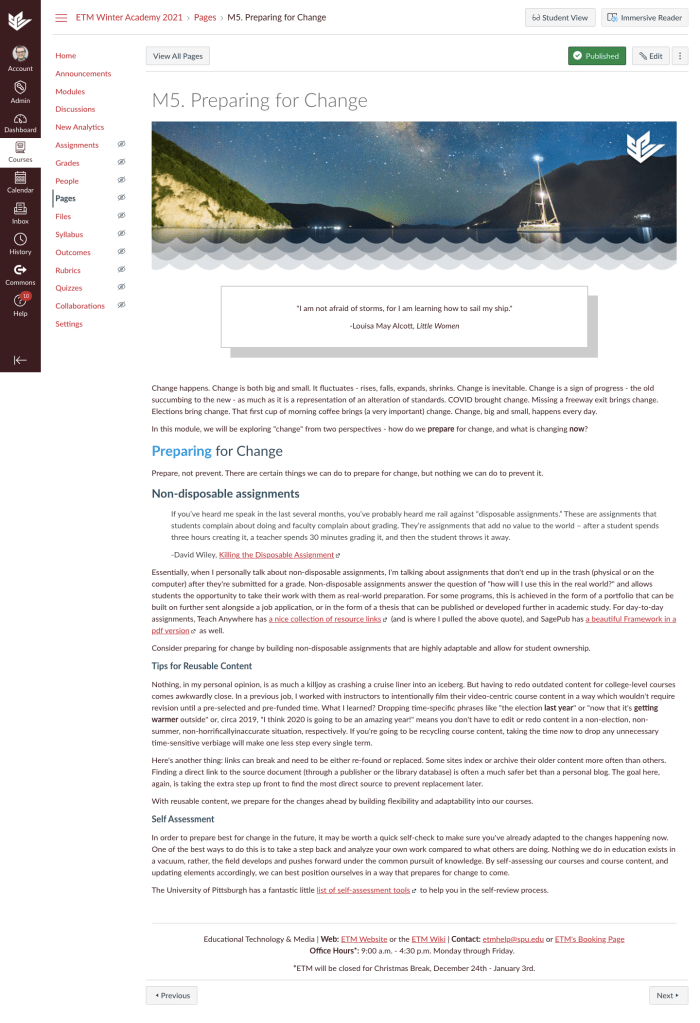
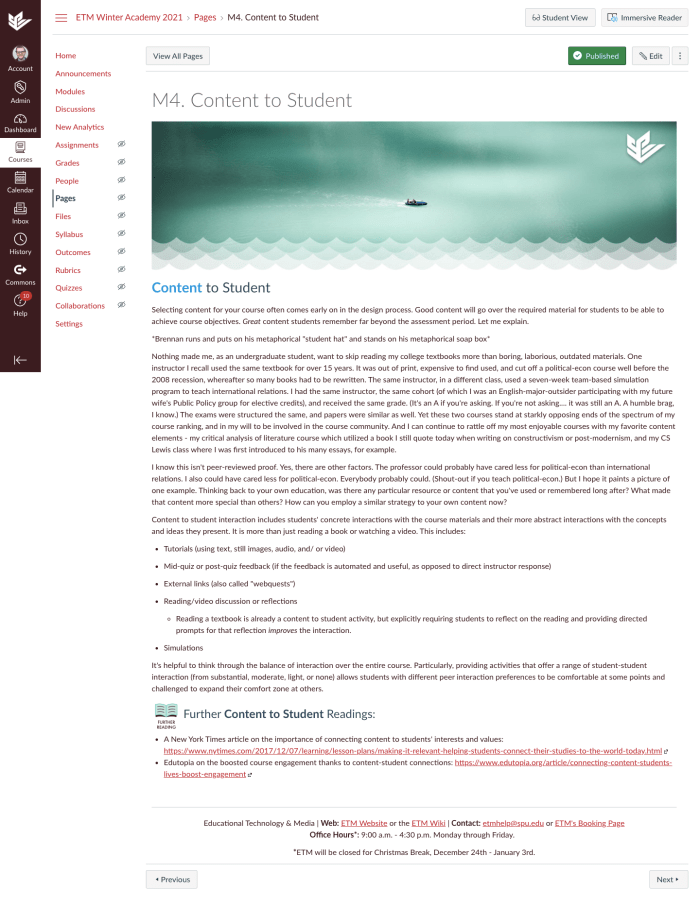
The workshop used a multi-modal learning experience hosted in Canvas.
Components included:
- structured Canvas learning modules
- guided design worksheets
- asynchronous discussion boards
- peer review activities
- live Zoom-based VILT sessions
- collaborative reflection activities
This structure allowed faculty to both learn online pedagogy and experience it as learners, reinforcing best practices through the design of the workshop itself.
Deployment
Participation was voluntary, with two levels of engagement:
Observer Track
- Attend live virtual sessions
Full Workshop Track
- Complete all Canvas modules
- Participate in peer review
- Redesign a course module
- Receive a faculty stipend
Participation included:
- ~50 faculty attending live sessions
- ~20 faculty completing the full workshop experience
The workshop represented faculty across multiple departments and disciplines.
Due to its success, the program later inspired recurring faculty development workshops, though those subsequent sessions were developed by others.
Impact
The program had both immediate and long-term effects on course design across the university.
Faculty Impact
- 50+ faculty exposed to online pedagogy strategies
- 20 faculty redesigned course modules through full participation
- overwhelmingly positive participant feedback through surveys and testimonials
Institutional Impact
If participating faculty taught an average of four courses per term, the workshop influenced approximately 200 courses per term moving forward.
Students reported:
- stronger sense of course structure
- improved engagement opportunities
- clearer purpose in their online learning experience
During a period when students questioned the value of online higher education, the initiative helped reinforce the distinctive educational experience of SPU even in a fully online environment.
Artifacts
Examples from the workshop include:
- Canvas module structure and learning activities
- Course redesign worksheet used by faculty
- Sample discussion prompt design activity
Key Learning Insight
Designing faculty development requires more than presenting pedagogical theory.
Faculty benefit most from structured design experiences that apply principles directly to their own courses, allowing them to immediately translate ideas into practice.

