Case Study: Fuel Efficiency Quarterly Recurrent (B737 Pilot Group)
Role: Instructional Designer / Course Developer (end-to-end production: research, design, media capture, simulation, build)
Audience: All pilots at Alaska Airlines
Modality: 15-minute simulation-based CBT (scenario + decision points)
Tools: Articulate Storyline; Microsoft Flight Simulator; real-world video capture; LMS delivery via Cornerstone
1) Overview
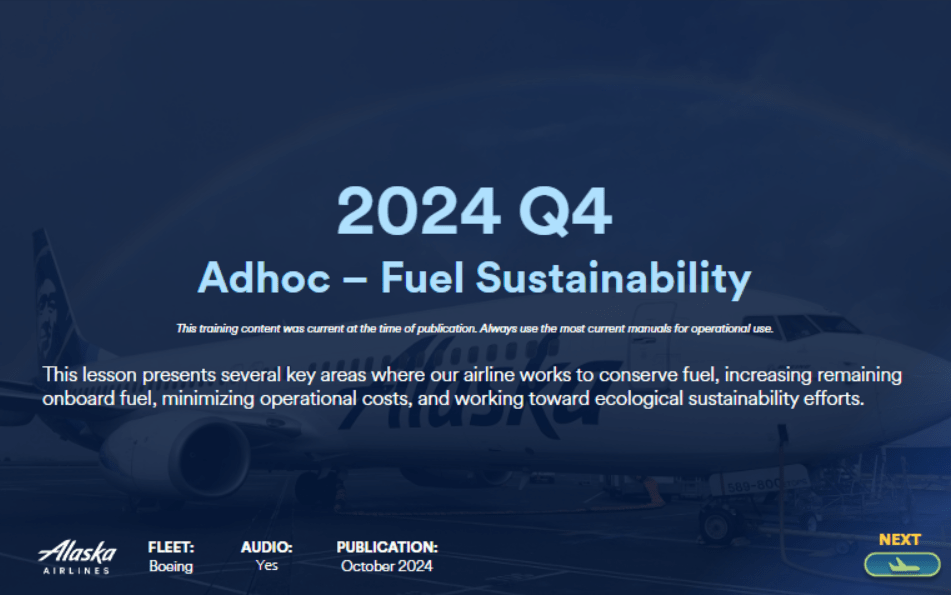
To support airline-wide fuel reduction efforts without compromising safety, I helped develop a brand-new quarterly recurrent course for the Boeing 737 pilot group. The course used a short, high-impact simulation format—15 minutes, story-driven, and interactive—designed to shift pilot perception from “these things don’t matter” to “small changes scale across the operation.”
The module combined real-world video (credibility and operational relevance) with flight simulation footage (visualization and emotional hook) and embedded decision points that emphasized when fuel-saving techniques are appropriate vs. not appropriate.
2) The Problem
Fuel is one of the largest controllable operating costs in aviation. However, fuel-saving behaviors can be perceived as marginal or “not worth it,” especially when pilots correctly prioritize operational tempo, passenger comfort, and—above all—safety.
Training goal: Increase awareness and adoption of fuel-saving opportunities that do not compromise safety, and show how incremental improvements compound at scale.
3) Constraints & Risk Management
- Safety as a non-negotiable constraint: The course explicitly reinforced that safety is never traded for cost savings, and techniques were framed with “when NOT to use this” guidance.
- Safety review: A Safety Risk Assessment (SRA) was completed and the content was cleared by a qualified SME, and I designed within its guardrails.
- Time and workload: Branching scenario paths were deprioritized in favor of a linear narrative with decision points, ensuring timely delivery while preserving interactivity.
4) Discovery & Research (Evidence-based design)
The course was built around seven fuel-saving focus areas, and relied on cross-functional data sources to validate claims. I grounded the module utilizing:
- FOQA and dispatch data as baseline tracking inputs
- Fuel uplift and operational comparisons to help validate savings estimates and support behavior-change messaging
- Program evidence for route optimization tools: Flyways reporting requirements explicitly track planned “Fuel Burn” and related variables and feed analytics workflows.
- Support for route optimization’s expected value: A business case cited projected fuel consumption reduction from route optimization capabilities
5) Instructional Strategy
Key strategy: Change the mental model from “these behaviors are negligible” to “small improvements scale dramatically”.
To do that, the course:
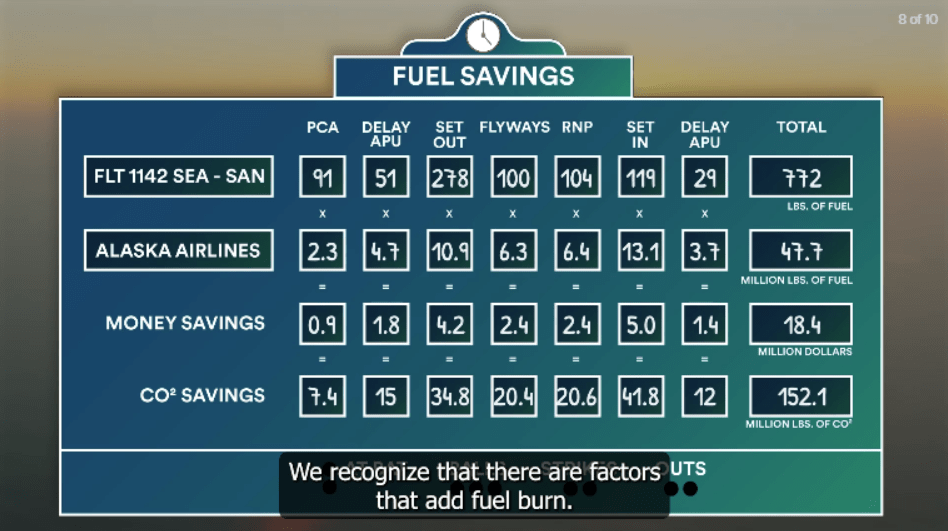
- Opened with a “best-case” flight that applied all seven focus areas to demonstrate cumulative impact
- Acknowledged operational reality: on most flights, only one or two items may be feasible
- Then reframed impact at scale: if thousands of flights each improve one small thing, the overall effect becomes meaningful
- Reinforced safety guardrails throughout (“when NOT to…”)
6) Learning Experience Design (15 minutes, high density)
Format: Linear story with embedded advancement points
Media mix:
- Real-world video → credibility and operational grounding
- Simulator footage → visualization, emotional engagement, and scenario continuity
Topics incorporated:
- Single-engine taxi: addressed perception and showed practical considerations and limitations (aligned with Flight Ops guidance that single-engine taxi is standard for fuel economy, with considerations).
- APU / PCA timing: encouraged best practices around using ground power/PCA when available and managing APU usage thoughtfully when conditions allow.
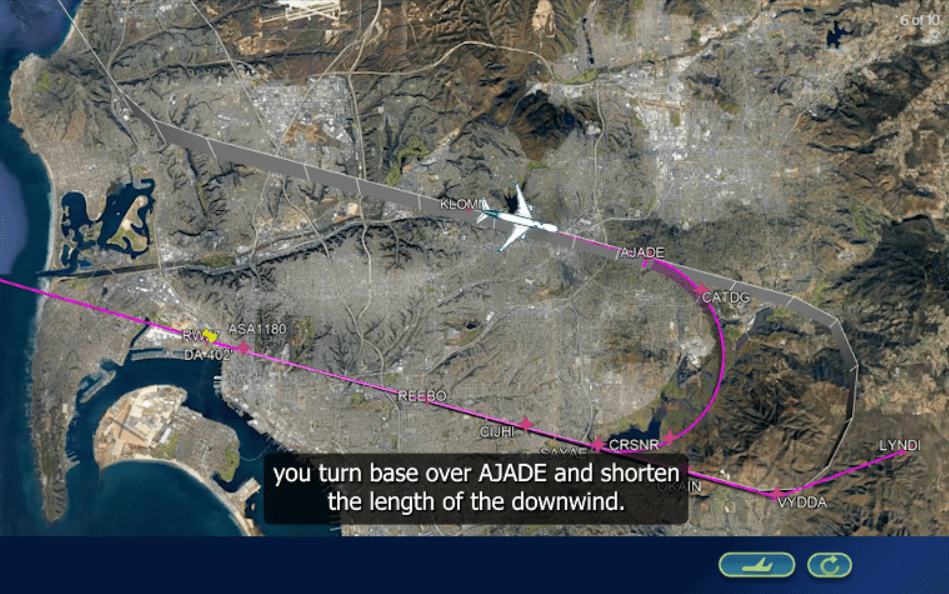
- Route optimization (Flyways): clarified what dispatch tools are doing “behind the scenes,” so pilots understand where savings come from even when it’s not directly pilot-controlled (supported by formal Flyways reporting and tracking).
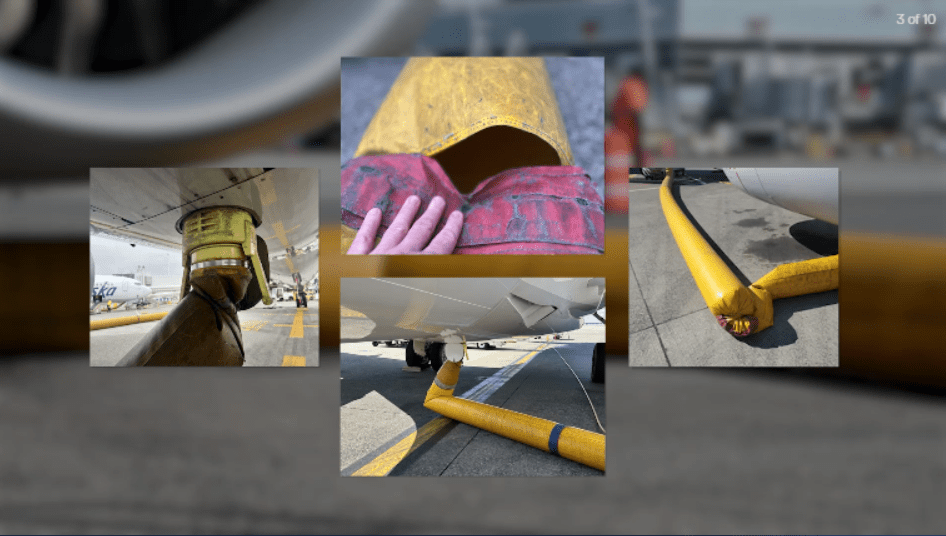
- Airport-specific operational improvements (e.g., PCA hose upgrades): highlighted how infrastructure changes interact with pilot decisions (validated via trials/SME input and field observation)
7) Development & Production
I handled end-to-end production tasks typical of a multimedia simulation CBT:
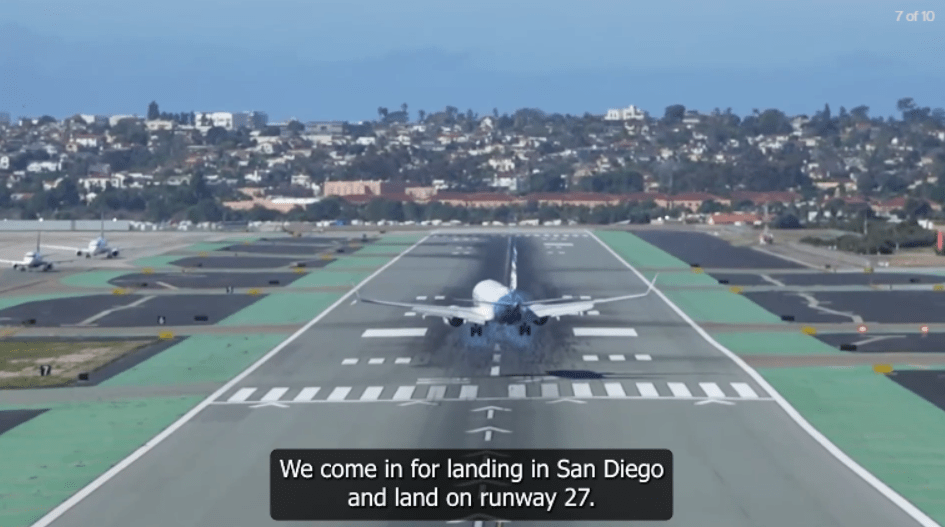
- Filmed at the airport to capture authentic operational context (with SME validation)
- Created scenario flights and captured simulator footage at high fidelity for cinematic clarity
- Built the final interactive module in Articulate Storyline with embedded checks and decision moments
- Partnered with SMEs and stakeholders for accuracy, tone, and risk mitigation
8) Delivery & Assessment
- Delivered as mandatory quarterly recurrent through Cornerstone, with a knowledge check to confirm understanding.
- Quarterly training cadence and operational communications are consistent with Flight Ops quarterly training administration practices.
(Public note: This case study focuses on learning design and measurable behaviors; proprietary operational details, thresholds, and internal links are intentionally omitted.)
9) Outcomes
- Increased awareness of fuel-saving opportunities and the “why” behind them
- Strong leadership endorsement due to the safety-first framing and evidence-based approach
- Noted cost reduction during Q4 2024, aligned to program goals

